
The complete guide
Choosing a Conical Burr Coffee Grinder for Your Home
Fresh coffee starts before the brew
Buying good beans can feel disappointing when the cup still tastes flat, sharp or uneven. The grinder is one part of that puzzle. It changes whole beans into grounds, and the size of those grounds affects how water moves through your coffee.
Grinding at home also lets you prepare coffee close to brewing time. Instead of committing to one bag of pre-ground coffee, you can adjust the grind as your beans or brewing habits change.
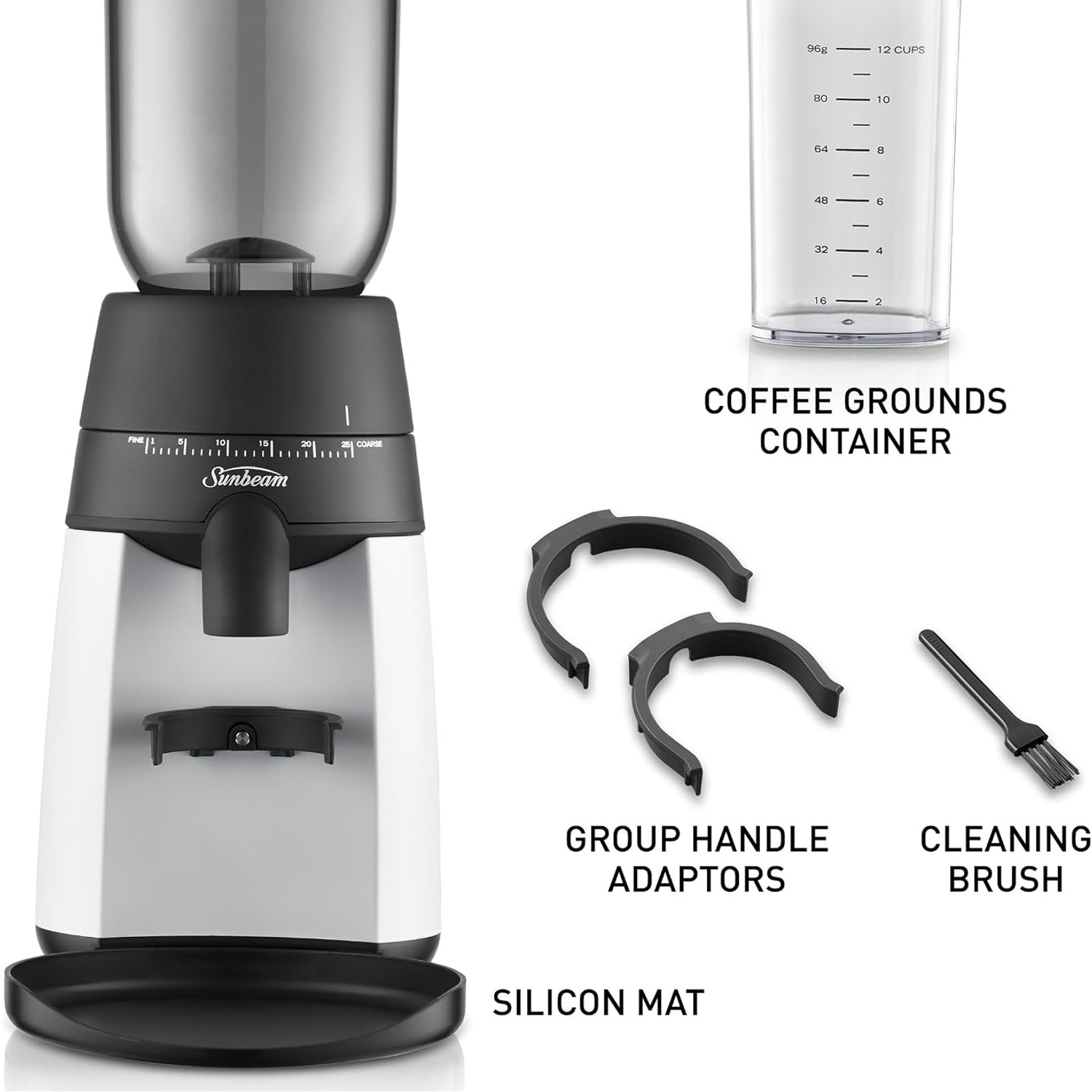
This conical burr coffee grinder offers 25 settings, AC-powered operation and a 250 g hopper. It also supports direct-to-handle grinding for espresso preparation. Those are useful starting points, but choosing well means checking how they fit your actual routine.
What the burr design does
A burr grinder breaks beans down between grinding surfaces. With a conical design, those surfaces have a cone-shaped arrangement. Changing the setting changes the space involved in grinding and, in turn, the size of the grounds.
The maker describes this model as designed for consistent grinding with limited heat transfer. That is useful because an uneven mix of large and tiny particles can make it harder to repeat a coffee recipe.
Still, a grinder cannot promise a perfect cup on its own. Bean freshness, the amount of coffee, water and brewing time all matter. Think of an electric burr grinder as a way to control one important part of the process, rather than a fix for every coffee problem.
The burr material and exact particle-size range are not stated by the maker. If either matters to your choice, ask before ordering.
What 25 settings mean in daily use
The settings give you separate points to try as you adjust your coffee. You might need a different setting after changing beans, switching brewers or deciding that your usual cup tastes too strong or too thin.
A 25 setting coffee grinder gives you options, but the number alone does not tell you how fine it goes. It also does not show how much the grind changes between neighbouring settings.
Start with the instructions for your brewing method. Then keep the rest of your recipe steady while you adjust the grinder. Changing the coffee amount, water and grind together makes it hard to know which change helped.
Write down the setting when you find a result you enjoy. That simple habit gives you a starting point for the next batch, even if you later need a small adjustment.
Matching it to your brewing method
The maker describes use for espresso, filter, plunger and Turkish coffee. These methods ask different things from ground coffee, so it is worth thinking about which one you make most often.
If you want a coffee grinder for espresso, look closely at fine adjustment and handle fit. Espresso can be sensitive to small grind changes. The maker does not include particle-size measurements or test results for particular machines.
For someone seeking a coffee grinder for filter coffee, the main task is finding a setting that works with the chosen brewer and recipe. A slow brew or an unpleasant cup may call for an adjustment, but grind is only one possible cause.
A coffee grinder for plunger coffee should also fit your preferred brewing approach. Follow your brewer's guidance, then use taste to refine the setting. Turkish coffee needs particular care because a very fine result may be essential. Confirm that requirement rather than relying only on the list of suggested uses.
Direct-to-handle grinding and your workflow
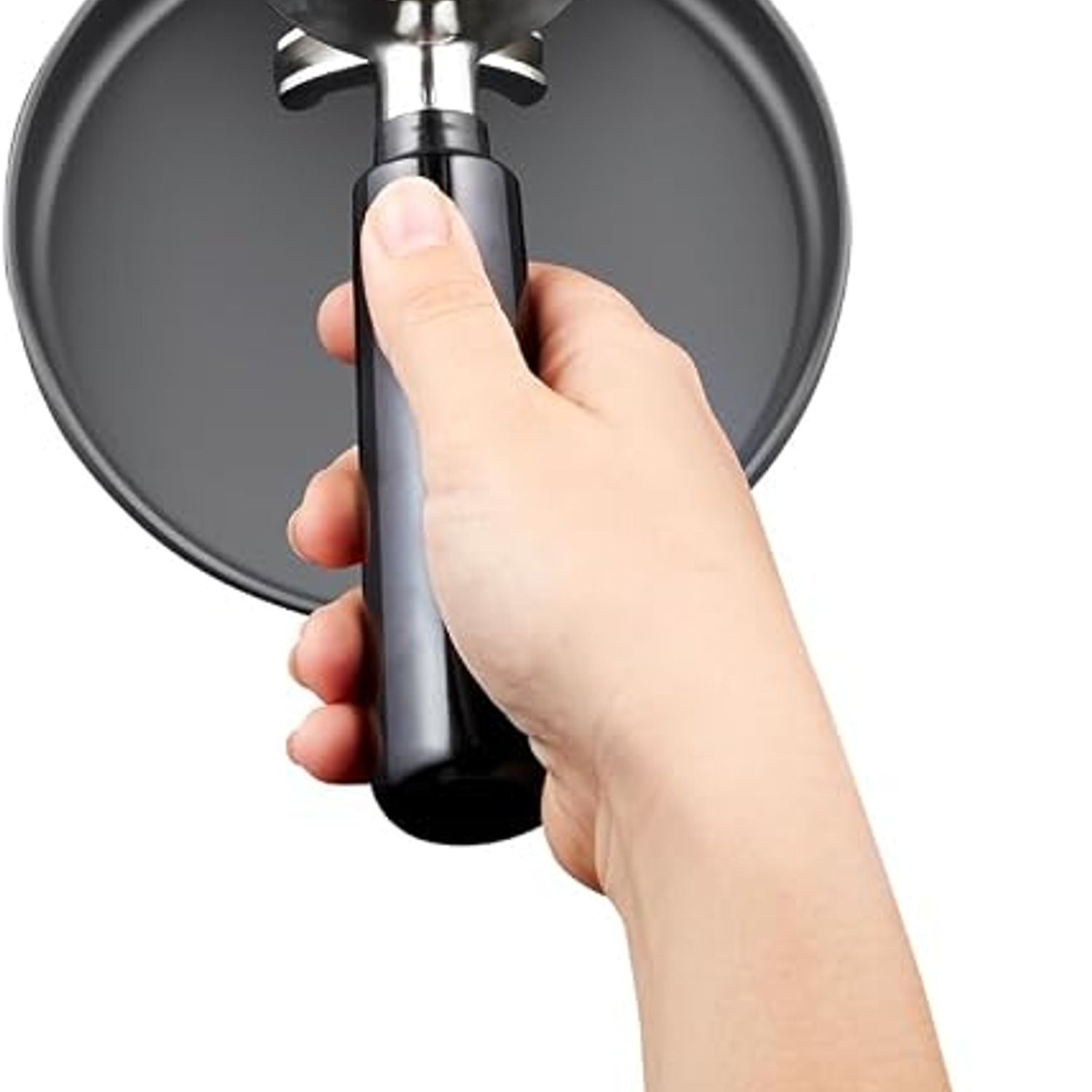
Direct-to-handle grinding means the grounds can go into your coffee handle without a separate transfer step. If espresso is part of your morning, that may make preparation simpler.
It does not mean the grinder has confirmed automatic dosing. A timer, weighing system and automatic dose control are not specified by the maker. You still need a way to keep track of how much coffee you are preparing.
Handle fit is another detail to check. The maker's description does not provide compatibility measurements, so do not assume every handle will sit in the same way.
Think through your normal workflow before buying. Where will you hold or place the handle? Is there room beside your espresso machine? Can you reach the grinder without moving other appliances? Small practical checks can matter more than an extra feature you rarely use.
Choosing a hopper size that suits you
This model has a listed hopper capacity of 250 g. That tells you how many beans it can hold, not how much ground coffee it produces in one cycle or how many cups it will make.
Cup counts vary with your recipe. A larger coffee dose uses the beans faster, while smaller doses stretch them further. Avoid choosing a grinder on an assumed number of servings.
You do not need to treat hopper capacity as a target to fill every time. Follow the operating instructions for suitable loading amounts. Keep the rest of your beans stored according to their packaging guidance.
A 250 g hopper coffee grinder may appeal if you want beans ready near your brewing area. If you prefer to measure each portion before grinding, check the operating instructions to see how that approach fits this model.
Check your bench space and power supply
The supplied specifications list dimensions of 30.9 cm long, 17.9 cm wide and 28.6 cm high. The listed weight is 2.4 kg.
Measure the place where you plan to use it, not just the gap where it might fit when stored. You need room to reach the controls and add beans. Space under a cupboard can look generous until you try to open or fill an appliance.
The product uses AC power. Voltage, plug type and motor wattage are not provided by the maker, so confirm electrical compatibility for your location before purchase.
Plan for a dry, suitable work surface near an appropriate outlet. Avoid a position where the grinder or its cord could come into contact with water during normal kitchen use.
What the material details do and do not tell you
The supplied specifications describe the material as plastic and the colour as Grey/White. They do not identify the material of every part.
In particular, the overall material entry should not be read as a description of the burrs. Their material is not specified. Neither are details about coatings, replacement burrs or service intervals.
The same care applies to features not mentioned in the maker's description. There is no stated noise level, dishwasher rating or automatic dosing function. If one of those is central to your decision, get an answer before ordering.
A useful product comparison separates confirmed features from assumptions. For this adjustable coffee grinder, the confirmed points include its 25 settings, conical burr design, hopper capacity and direct-to-handle grinding.
Building a repeatable coffee routine
Once you have checked the supplied instructions, start with one brewing method and one familiar coffee. Use a measured amount so that you have a fair basis for comparing results.
Make a cup, taste it and note what you want to change. Adjust one part of the recipe at a time. A small notebook or a note on your phone is enough to record the setting and coffee amount.
Do not chase the same setting number across different grinders. Numbers are reference points for that machine, not a shared measurement of particle size.
The most useful home coffee grinder is one you can work into your routine. If preparation feels manageable and you can repeat a cup you enjoy, that matters more than collecting settings you never use.
Cleaning without risking the appliance
Switch off and unplug the grinder before cleaning. Keep the motor housing, plug and cord away from water.
Use the supplied instructions to find out which parts can be removed and how they should be cleaned. Where permitted, a soft brush can help clear loose, dry grounds. Do not assume a part is washable just because it comes off.
Dishwasher suitability is not stated. Unless the instructions clearly allow it, keep parts out of the dishwasher. Any parts approved for washing should be fully dry before they go back into place.
Avoid forcing tools into the grinding area or taking apart components beyond the instructions. If access is unclear, seek guidance rather than guessing. Straightforward care is easier when the cleaning process is understood from the start.
Before you place your order
Check the details that could stop this coffee bean grinder from fitting your needs. Power compatibility comes first, followed by bench space and any coffee-handle requirements.
If you need an especially fine grind, confirmed quiet operation or a specific dosing feature, ask for those details. The available record does not settle those questions.
Also read our delivery and returns pages' delivery and returns information. A delivery date, warranty period and return conditions are not given by the maker by the maker. For a gift, these checks are especially helpful because the recipient may have equipment or space limits you have not seen.
The short version
This grinder offers conical burrs, 25 grind settings, a 250 g hopper and direct-to-handle grinding. It is an option for people who want to grind beans at home and adjust their coffee preparation.
Choose it on those confirmed features. Check power requirements, handle fit and any essential grind needs before buying, then use a steady recipe to find the settings that suit your cup.